When and How to Harvest Honey: A Guide for Backyard Beekeepers
| HiveBloom
There is nothing quite like pulling your own honey. It’s the payoff for months of inspections, feeding, mite treatments, and hoping the weather cooperates.
But timing matters. Harvest too early and the honey isn’t cured. Take too much and the colony can’t make it through winter. Here’s how to get it right.
When Is Honey Ready?
Honey is ready to harvest when the bees say it is. They tell you by capping the cells with a thin layer of wax.
Capped honey has been dehydrated to about 18% moisture content. At that level, it won’t ferment and will keep indefinitely. Uncapped honey may still have too much moisture. If more than a quarter of the cells on a frame are uncapped, it’s not ready yet.
You can test uncapped frames by holding them horizontally and giving a firm shake. If nectar drips out, the moisture content is still too high. Leave it for the bees to finish.
How Much to Leave
This is the most important decision of the harvest. Take too much and you’ll be feeding sugar syrup all fall, or worse, you’ll lose the colony to starvation over winter.
How much the colony needs depends on your climate:
- Mild winters (southern US, coastal areas): 40-60 lbs of honey
- Moderate winters (mid-Atlantic, Pacific Northwest): 60-80 lbs
- Cold winters (northern US, Canada): 80-100 lbs
A full deep frame holds roughly 6-8 lbs of honey. A full medium frame holds about 4-5 lbs. Count your frames and do the math before you start pulling supers.
When in doubt, leave more than you think they need. You can always harvest extra in the fall if the colony has a surplus. You can’t undo starvation.
Methods for Getting Bees Off the Frames
You need the honey. The bees disagree. Here are your options, from simplest to most involved.
Bee Brush
Gently brush bees off each frame and place the cleared frames in a covered container. This is the most common method for small-scale beekeepers. It works, but it’s slow and the bees don’t love it.
Fume Board
A fume board is a cover with an absorbent pad that you treat with a bee-repellent liquid (like Bee-Go or Fischer’s Bee Quick). Set it on top of the super and the smell drives bees downward. Most of the super clears in a few minutes.
Works well, but some repellents have a strong odor. Use it outdoors and follow the product directions.
Bee Escape
A bee escape is a one-way door that you place between the honey supers and the brood box. Bees can leave the super but can’t get back in. Put it on the evening before harvest day, and the super should be mostly clear by morning.
This is the gentlest method and causes the least disruption, but it requires planning ahead.
The Harvest Process
Once you have your frames cleared of bees:
1. Uncap the Honey
Use an uncapping knife (heated or cold), an uncapping fork, or an uncapping roller to remove the wax cappings. Work over a container to catch the cappings and the honey that drips off them. Cappings honey is some of the best.
2. Extract
If you have an extractor (a centrifuge that spins honey out of the frames), load the frames and spin. Start slow to avoid blowing out fresh comb, then increase speed.
No extractor? You can crush and strain. Cut the comb off the frames, crush it in a bucket, and let the honey drain through a strainer. You lose the comb, but the honey is just as good.
3. Strain and Settle
Pour the extracted honey through a double strainer to catch wax bits and debris. Let it settle in a bucket for 24-48 hours. Air bubbles and any remaining particles will rise to the top. Skim them off, and you have clean, jar-ready honey.
4. Jar It
Fill clean, dry jars. Honey doesn’t need to be hot-packed or processed. It’s naturally shelf-stable. Label with the harvest date and floral source if you know it.
After the Harvest
Return Wet Frames
After extracting, put the “wet” frames (still coated in a thin layer of honey) back on the hive. The bees will clean them up in a day or two, recovering every last bit of honey and leaving the drawn comb ready for next year.
Do this in the evening to avoid triggering robbing behavior from other colonies.
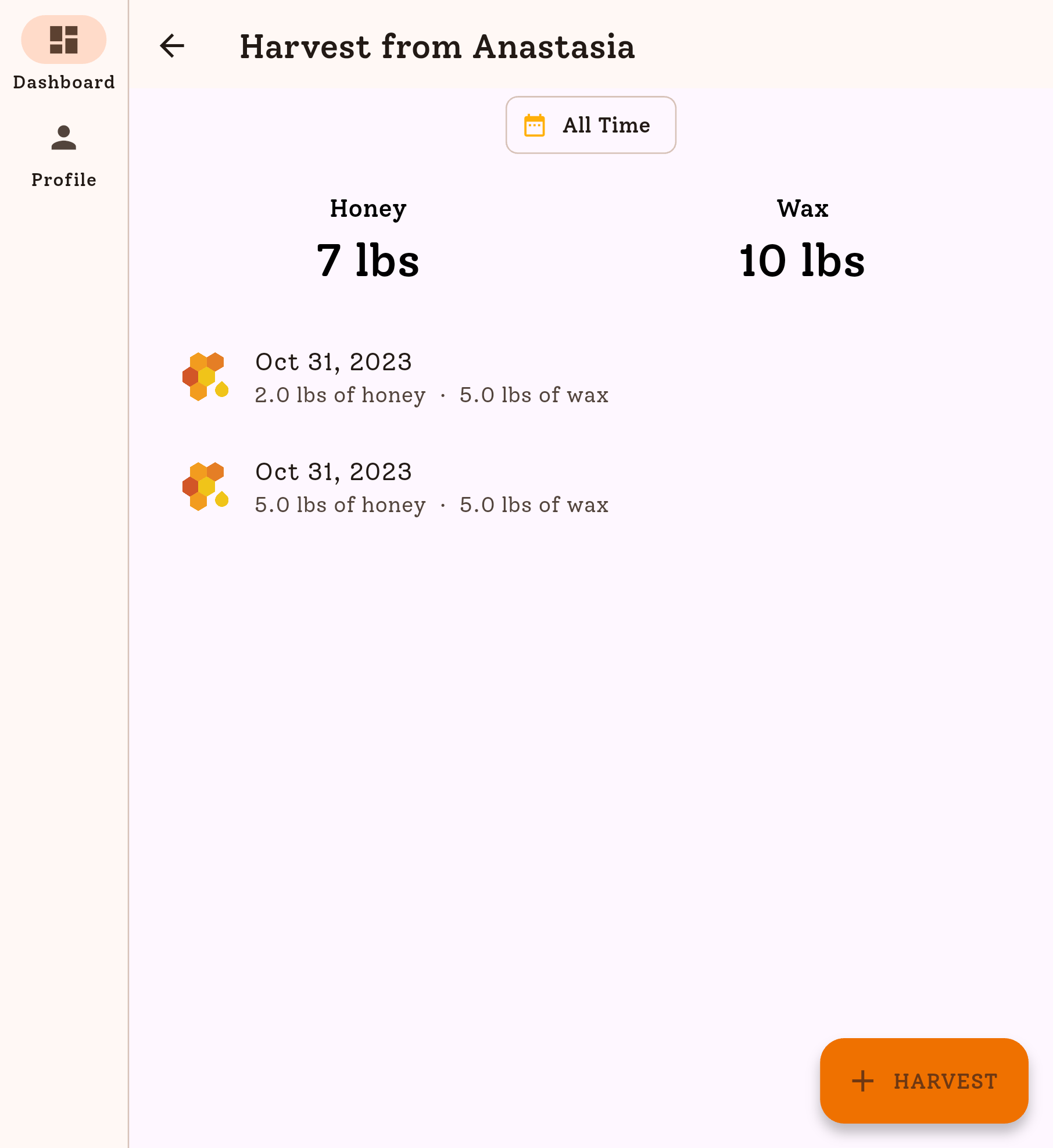
Record Your Harvest
Note how many frames you pulled, which hives they came from, and an estimate of the total yield. This is enormously useful over time. You’ll start to see which hives are your best producers, how your yields compare year to year, and how weather patterns affect your harvest.
Assess Winter Readiness
After harvest is the time to start thinking about fall management. How much honey is left in each hive? Do you need to start feeding? Are mite levels in check before winter bees start being raised?
The harvest marks the pivot point in the beekeeping year. Everything after it is about getting the colony through to next spring.