How to Package and Label Honey for Selling or Gifting
| HiveBloom
You’ve pulled frames, extracted, filtered, and settled your honey. Now comes the part that determines whether it ends up on a shelf or in a gift bag: packaging. Getting it right matters whether you’re selling at a farmers market, stocking a local shop, or giving jars to neighbors.
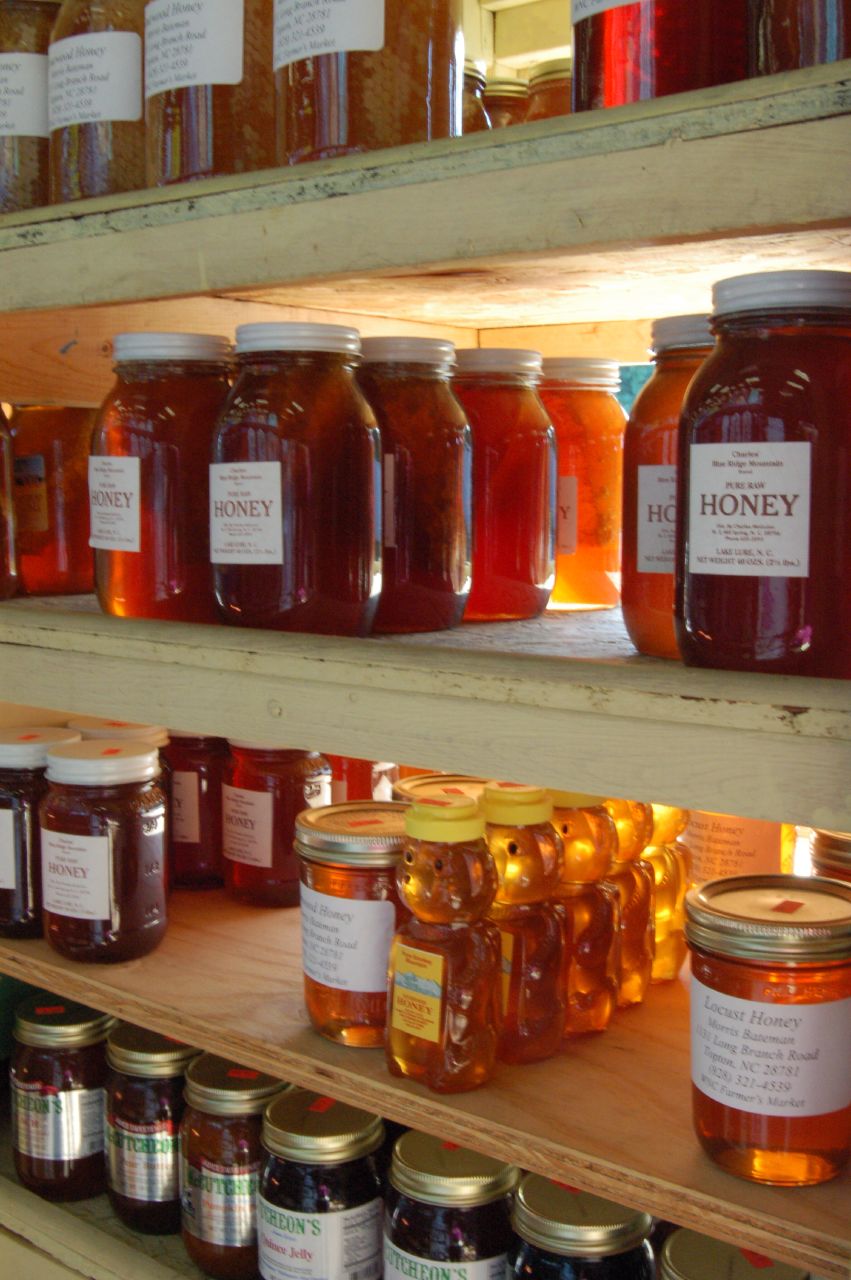
Photo: Holly, CC BY 2.0
Choosing Your Container
Glass is the standard for a reason. It doesn’t absorb odors, doesn’t leach anything into the honey, and looks good on a shelf. Wide-mouth mason jars work well and are cheap to source in bulk. Hex jars are popular for farmers markets because they’re visually appealing and stack neatly.
Plastic is lighter and less likely to break at markets, but it has trade-offs. Food-grade HDPE or PET containers are the safe choices. Avoid anything not explicitly rated for food use. Some buyers are skeptical of plastic, especially for premium varietal honey.
Specialty containers (bears, honeycomb shapes, flip-top bottles) work well for gifts. They cost more per unit but can justify a higher price point.
Fill containers to within about a half inch of the top. Honey expands slightly with temperature changes, and an overfull jar is harder to seal cleanly.
Labeling Requirements
Labeling rules vary by state, but most follow the same core requirements. If you’re selling (not just gifting), plan to include all of these:
- Product name: “Raw Honey,” “Pure Honey,” or just “Honey” are all common.
- Net weight: Listed in both ounces and grams (e.g., “12 oz (340 g)”). This is a federal requirement for any product sold by weight.
- Producer name and address: Your name or business name and a mailing address.
- Country of origin: Required if selling commercially. “Product of USA” covers it.
Some states add requirements like a license number, grade statement, or allergen notice. Check with your state’s department of agriculture before selling. Many states have cottage food exemptions with higher thresholds before full commercial licensing kicks in.
For gifts, you can skip most of this, but a simple label with the floral source (wildflower, clover, buckwheat) and your name adds a nice touch.
Dealing with Crystallization
Crystallization is natural. It’s not spoilage. But it surprises buyers who aren’t expecting it, so address it proactively.
Raw honey crystallizes faster than processed honey because the pollen and natural enzymes are still present. High glucose varieties (clover, canola) crystallize faster than high fructose ones (tupelo, acacia).
A few options:
- Label it: “Raw honey may crystallize naturally. To reliquify, place jar in warm water (under 100F).” This sets expectations and positions it as a quality marker.
- Creamed honey: If you want to sell a product that won’t crystallize unpredictably, seed your honey with finely crystallized honey at about a 1:10 ratio and hold it at 57F. The result is a smooth, spreadable product with a consistent texture.
- Keep it cool: Honey crystallizes fastest between 50 and 65F. Room temperature storage (above 70F) slows it down.
Storage Tips
Honey stored correctly lasts indefinitely. The enemies are moisture and heat above 100F.
- Keep filled jars away from direct sunlight, which degrades color and flavor over time.
- Don’t refrigerate. Cold speeds crystallization and doesn’t add shelf life.
- Store bulk honey in food-grade buckets with tight-fitting lids. Keep them off concrete floors, which transfer moisture.
- If you’re holding inventory between markets, a cool, dark pantry or basement is ideal.
Presentation for Gifts and Markets
For gifting, a clean label, a piece of burlap under the lid band, and a small card explaining the floral source go a long way. Local honey makes a better gift when the story is clear.
For markets, consistency matters. Same jar size, same label placement, same fill level. A small chalkboard sign explaining varietal differences helps buyers choose. Offer a taste sample if your market allows it. Customers who taste almost always buy.
Consider bundling small jars (4 oz) as tasting sets if you have multiple varietals. It moves inventory, introduces buyers to your range, and sells at a better per-ounce margin than large jars.
Tracking Your Yields
Knowing how much honey you produced, from which apiary, and in which harvest helps you price consistently and plan for next season.
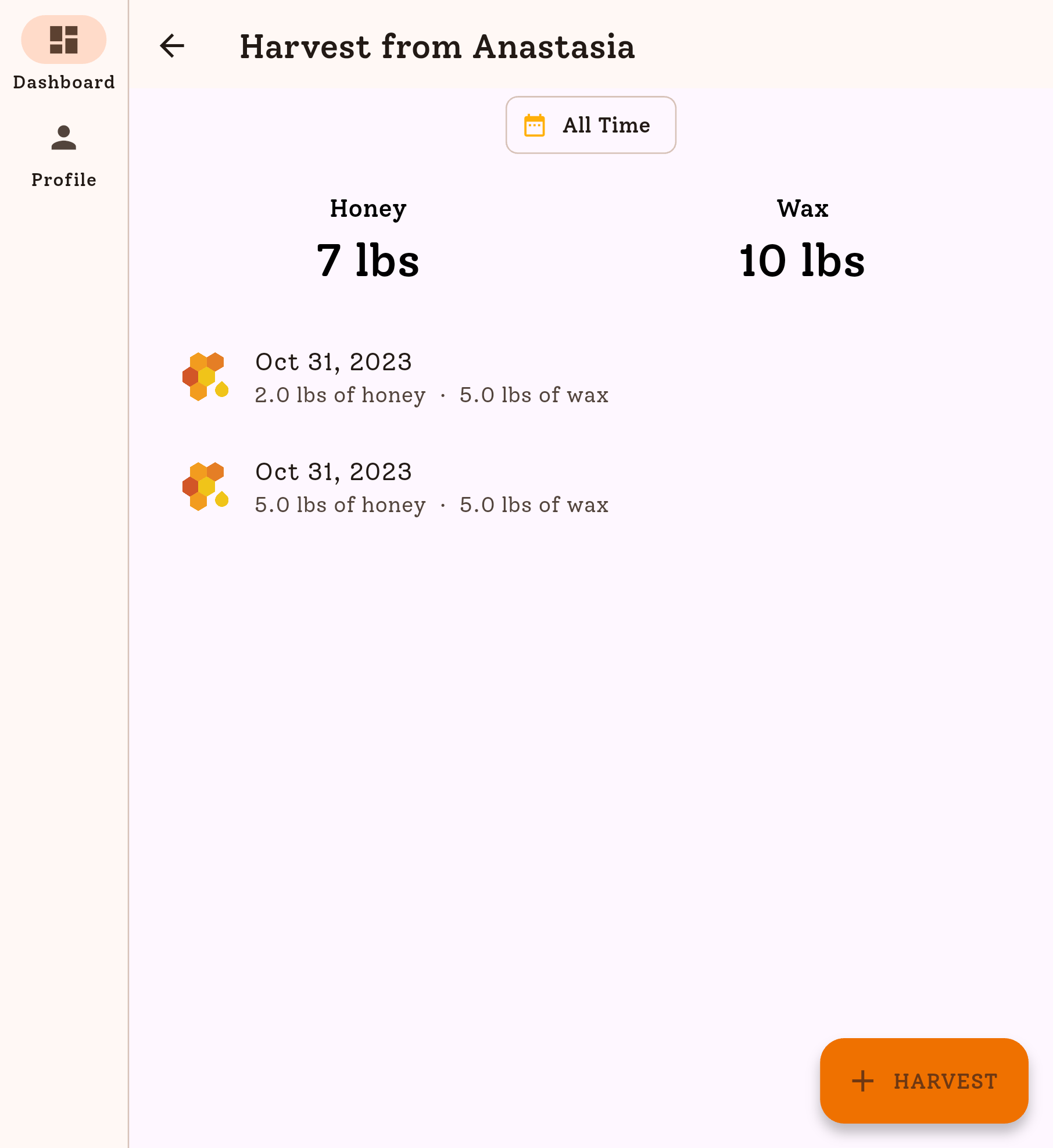
HiveBloom’s harvest log lets you record yields by hive so you can see which colonies are your top producers over time. That data is useful when you’re deciding how many jars to bring to market or how to allocate production across selling and keeping.
The more seasons you track, the better your projections get. A hive that reliably yields 40 pounds in a good year gives you something to plan around.
Packaging honey well is mostly about consistency and honesty. Good containers, clear labels, and realistic expectations about crystallization are enough to build a loyal customer base. The honey itself does the rest.