How to Track Varroa Mite Counts (and Why It Matters)
| HiveBloom
If you keep bees, you have varroa mites. The question isn’t whether they’re there. It’s how many, and whether the number is climbing toward a level that will kill your colony.
Regular mite counts are the single most important thing you can do to keep your hives alive. Here’s how to do it and what the numbers mean.
Why Counting Matters
Varroa destructor feeds on bee fat bodies and transmits a cocktail of viruses, including deformed wing virus (DWV) and acute bee paralysis virus. A colony can look healthy with a moderate mite load, then crash suddenly when the population tips past a threshold.
By the time you see obvious symptoms (deformed wings, spotty brood, bees crawling on the ground), the damage is already severe. Counting gives you a number you can act on before it gets to that point.
When to Count
Count at least three times per season:
- Spring (April/May) to establish a baseline after winter
- Mid-summer (July) when mite populations are growing fastest alongside brood production
- Late summer/early fall (August/September) to decide on treatment before winter bees are raised
More frequent counting is better. Monthly counts from April through October give you a clear picture of how the mite population is trending.
How to Count: The Alcohol Wash
The alcohol wash is the most reliable method. It kills about 300 bees (roughly half a cup), which is a tiny fraction of a healthy colony’s population.
What you need
- A mite wash cup (two nested jars or cups with a mesh screen between them)
- Rubbing alcohol or windshield washer fluid
- About half a cup of bees (~300)
Steps
- Find a frame with open brood (not the frame the queen is on). Nurse bees on brood frames carry more mites, giving you an accurate sample.
- Scoop or shake about half a cup of bees into the outer container. If you’re worried about getting the queen, find her first and set that frame aside.
- Add alcohol until the bees are fully covered.
- Swirl or shake for about 60 seconds. The alcohol dislodges mites from the bees.
- Strain the liquid through the mesh into the inner container. The mites pass through; the bees stay behind.
- Count the mites in the liquid. They’re small, reddish-brown, and oval-shaped.
Reading the number
Your result is mites per 300 bees. The commonly used thresholds:
- 0-1 mites: Low. No treatment needed right now, but keep monitoring.
- 2-3 mites: Moderate. Monitor closely. Consider treatment depending on the time of year.
- 3+ mites per 300 bees (1%): High. Treat soon, especially if it’s mid-summer or later.
- 9+ mites (3%): Critical. Treat immediately.
These thresholds shift by time of year. A count of 2 in April is more concerning than a count of 2 in June, because spring mite populations grow exponentially alongside brood.
The Sugar Roll Alternative
If you don’t want to kill bees, the sugar roll method uses powdered sugar instead of alcohol. Coat the bees in sugar, wait a few minutes, then shake the sugar (and dislodged mites) through the mesh.
It’s gentler, but less accurate. Sugar rolls tend to undercount by 10-20% compared to alcohol washes. If you use this method, adjust your thresholds down slightly.
Treatment Options
When counts exceed your threshold, common treatments include:
- Formic acid (Formic Pro, MAQS): works during honey supers, kills mites in capped brood
- Oxalic acid (dribble or vaporization): most effective during broodless periods
- Thymol-based treatments (Apiguard, ApiLife VAR): temperature-dependent, use in late summer
- Amitraz strips (Apivar): effective but requires rotation to avoid resistance
Each treatment has its own temperature range, timing requirements, and restrictions around honey supers. Follow the label.
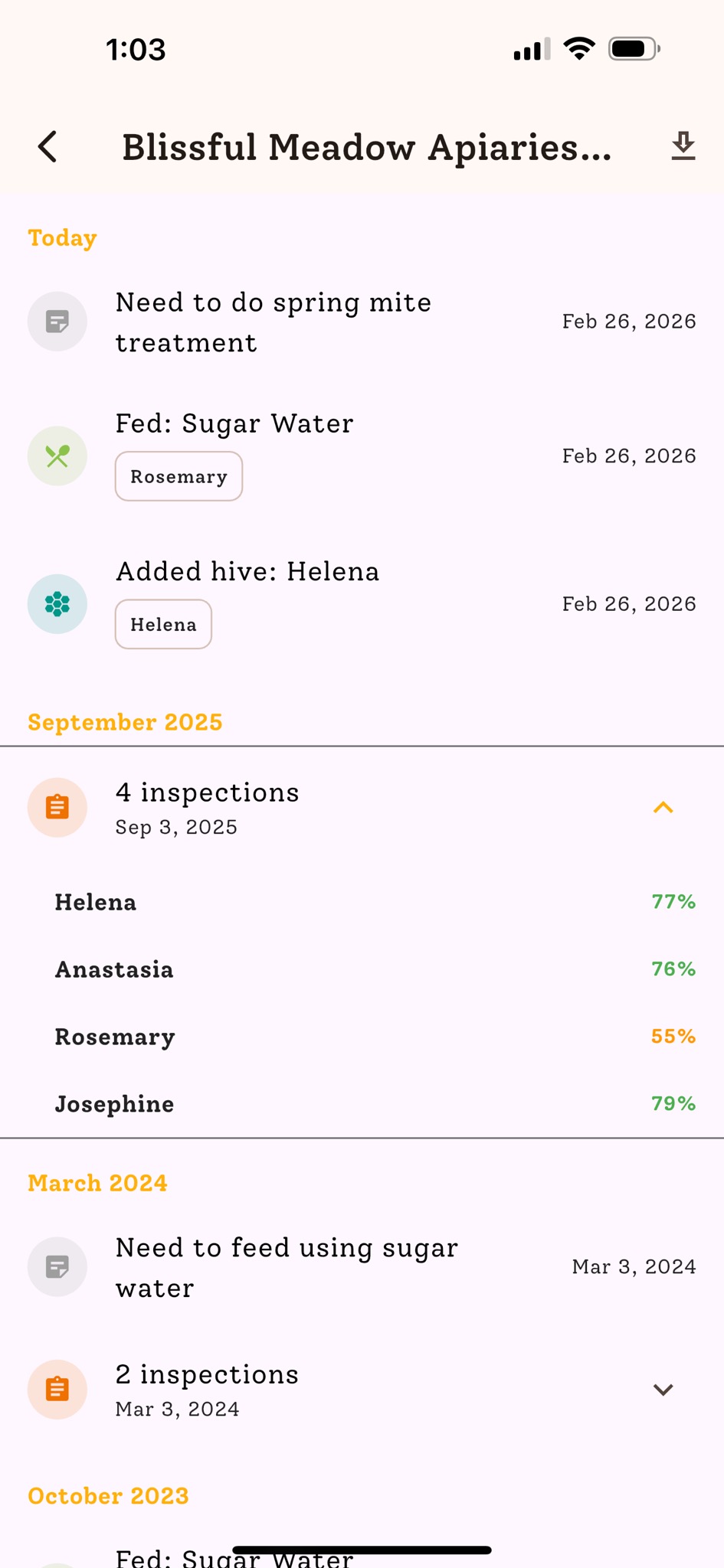
Tracking Over Time
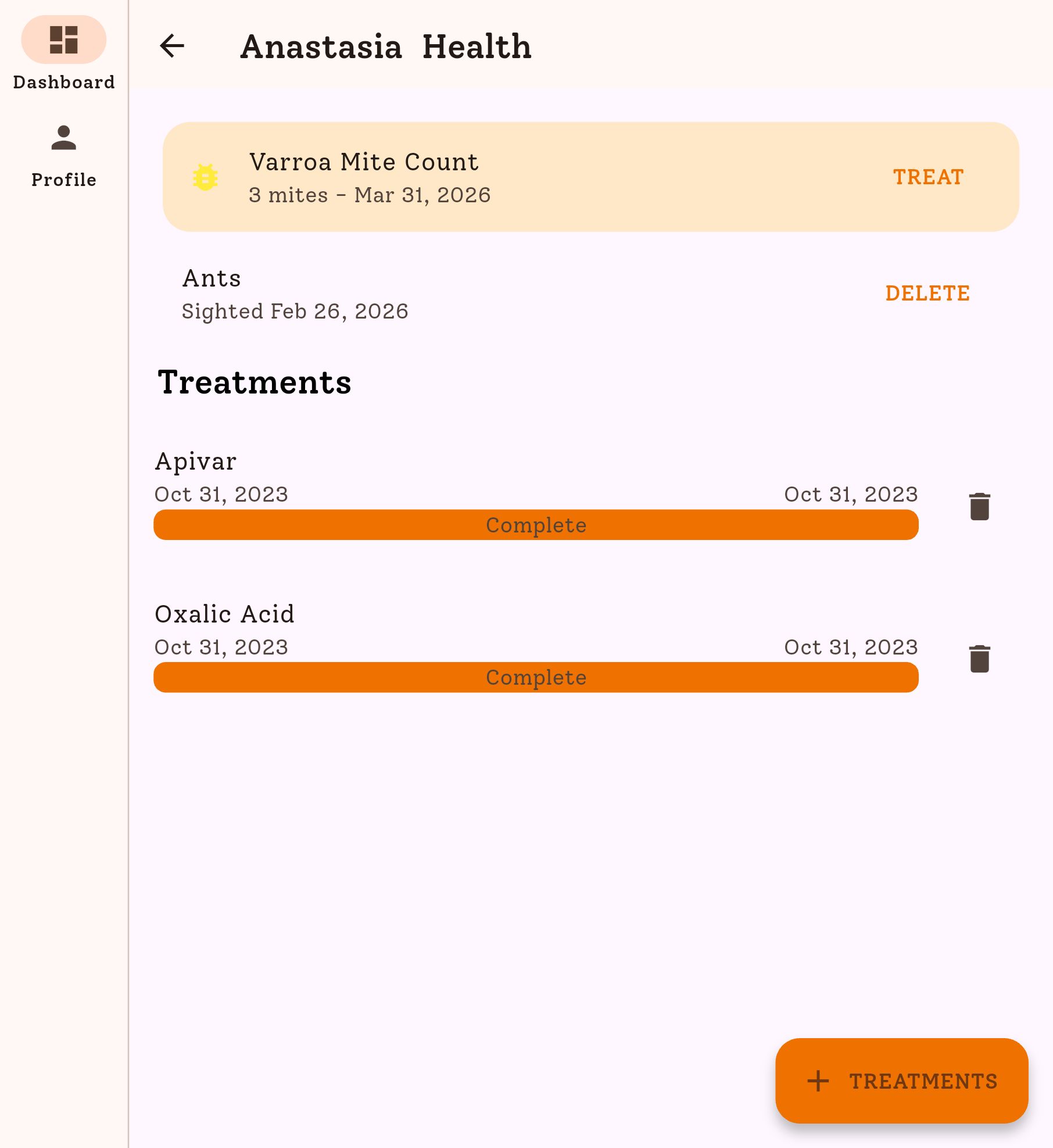
A single mite count is a snapshot. The real value comes from tracking counts across multiple inspections and seasons.
When you record every count, you start to see:
- How fast mites build up in each hive, which tells you about the colony’s natural resistance
- Whether treatments worked by comparing counts before and after
- Seasonal patterns in your area, so you can anticipate when mite pressure peaks
- Which colonies are chronic problems versus which ones manage mites well on their own
This data turns mite management from guesswork into a system. Instead of treating on a calendar, you treat based on what’s actually happening in each hive.
The Bottom Line
Test, don’t guess. A two-minute mite wash tells you more about your colony’s health than an hour of visual inspection. Build the habit, record the numbers, and you’ll lose fewer colonies.