Monks, Abbeys, and Bees: A History of Monastic Beekeeping
| HiveBloom
If you want to understand why bees were so important in medieval Europe, start with candles. Churches and monasteries burned enormous quantities of beeswax candles for liturgy, and tallow (rendered animal fat) was considered unworthy of sacred use. Beeswax burned cleaner, smelled better, and carried a symbolic weight: bees were seen as industrious, chaste, and divinely ordered. The practical need for wax made beekeeping a religious obligation as much as an agricultural one.
Wax, Honey, and Mead
The candle requirement was substantial. A single monastery might need hundreds of pounds of wax annually for altar candles, processional candles, and feast days. Growing that wax on-site was far cheaper than buying it, which meant most monasteries of any size kept bees.
Honey was valuable too, but secondary. It served as a sweetener before cane sugar became widely available in Europe, and monks used it medicinally, following traditions passed down from ancient Greek and Roman texts. Mead production was common, particularly in northern Europe where grapes wouldn’t grow and wine had to be imported at great expense. A monastery with good hives had a self-sufficient source of fermented drink for the community and for trade.
Pollination of orchards and kitchen gardens was a benefit monks understood intuitively, even if they didn’t frame it in modern terms. Records show apiaries consistently placed near fruit trees and herb gardens.
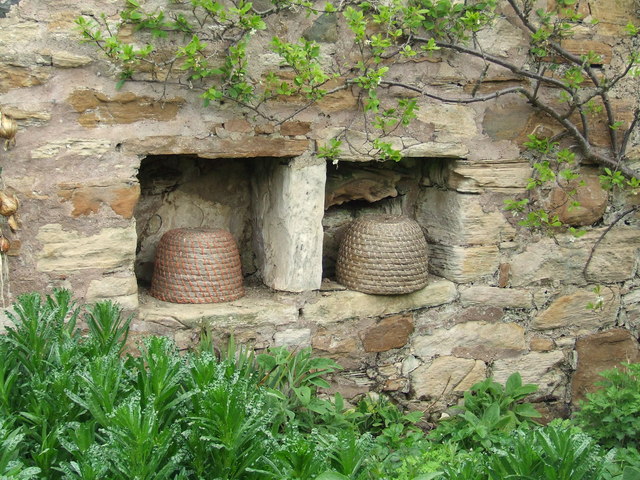
Photo: Gwen and James Anderson, CC BY-SA 2.0
How Monks Actually Kept Their Bees
Medieval monastic beekeeping relied primarily on skep hives: domed baskets woven from coiled straw or wicker, sealed with a mix of clay and dung. Skeps were cheap to make, effective at housing a colony, and easy to move. Their big drawback was that harvesting honey usually meant killing the colony by sulfur fumigation or drowning them in water. Experienced beekeepers learned to take only partial harvests, or to drive bees from the skep into an empty one above it to save the colony, but many colonies were simply destroyed at harvest each season.
Monasteries often built bee boles into their walls: recessed niches in stone or brick walls, south or southeast facing, sized to shelter a skep from rain and wind. Bee boles survive at dozens of sites across Britain and Europe. Some monastery walls still show rows of them, typically at waist height for easy tending. The National Bee Bole Register in Britain has recorded over 1,500 surviving examples, and monastery sites account for a significant share.
The monk or lay brother responsible for the bees held a recognized role, sometimes called the apiarius or bee master. Larger establishments treated apiculture as a skilled craft passed down through the community. Manuscripts from the period contain beekeeping instructions, and the abbeys that produced them treated the knowledge seriously.
The Wax Tithe
Honey and wax figured directly into medieval taxation and tribute. Serfs and tenant farmers sometimes paid rents in wax rather than coin, and churches collected wax tithes alongside grain and livestock. Domesday Book records wax renders from several English estates. The commodity was liquid enough to trade, stable enough to store, and valuable enough to count as real wealth.
This created an incentive structure that ran all the way down the social ladder. Lords wanted wax for their chapels. Monasteries wanted it for liturgy and trade. Peasants who kept hives had something worth paying in. Bees were entangled in the medieval economy at every level.
Some Abbeys Still Keep Bees
The tradition didn’t die with the Reformation or the dissolution of the monasteries. A number of active religious communities still maintain apiaries today, and some are notable enough that beekeepers know them by name.
Buckfast Abbey in Devon is the most famous example. Brother Adam, a Benedictine monk at Buckfast, spent decades in the twentieth century breeding what became the Buckfast bee, a hybrid strain selected for gentleness, productivity, and resistance to the tracheal mite that had devastated British colonies in the early 1900s. The Buckfast bee is still widely kept today, and the abbey’s beekeeping operation continued long after Brother Adam’s death in 1996.
Spencer Abbey in Massachusetts, a Trappist monastery, has kept bees for generations alongside its other agricultural work. Mount Angel Abbey in Oregon and several other Benedictine communities in North America maintain apiaries as part of the ora et labora tradition: prayer and work.
European monasteries with ongoing beekeeping operations include communities in France, Germany, and Austria, where the combination of beeswax production and honey sales supports monastic finances in the same way it did centuries ago.
What We Owe Them
Modern beekeeping stands on centuries of monastic observation. Monks tracked which colonies were gentle or aggressive, which sites produced better yields, and how weather and forage affected colony behavior. Some monastery records show multi-generational tracking of hive performance, knowledge passed down carefully through communities that valued patience and long-term thinking.
They developed techniques for managing colonies across seasons, selected for productive and docile bees, and built infrastructure (like bee boles) that reflected a deep practical understanding of what colonies need. Brother Adam’s twentieth-century breeding work at Buckfast didn’t come out of nowhere. It grew from a tradition of careful stewardship that stretches back to the earliest monastic apiaries.
The tools have changed. The discipline required hasn’t.